

Most offices look clean on the surface. Desks are wiped, floors are vacuumed, and the trash is emptied on schedule. But a closer look often reveals a different story. The areas that get touched most often are usually the ones that get cleaned least.
Below are ten spots that fall through the cracks in many offices, along with why each one matters more than it might seem.
Why Overlooked Areas Matter More Than They Seem
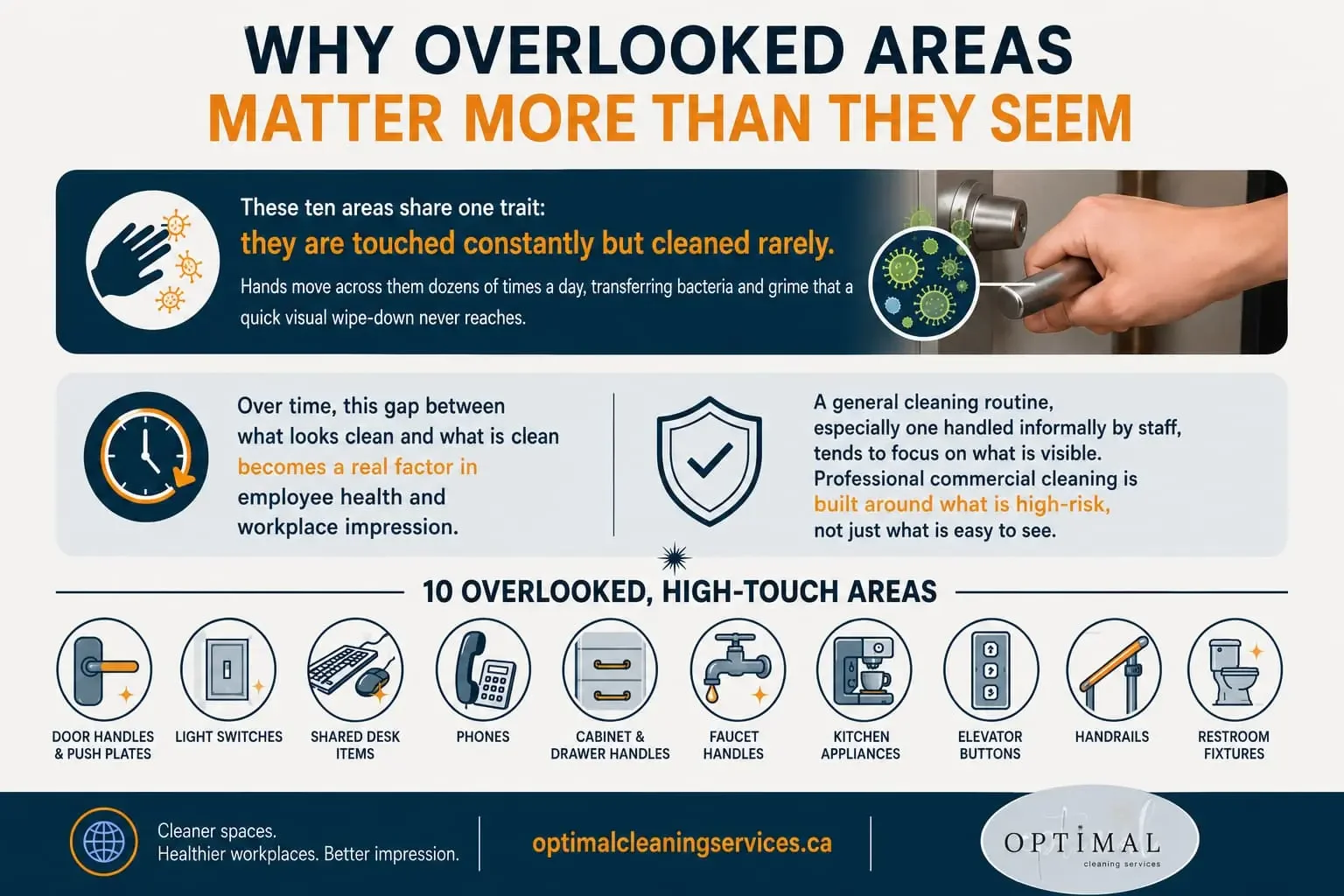
These ten areas share one trait: they are touched constantly but cleaned rarely. Hands move across them dozens of times a day, transferring bacteria and grime that a quick visual wipe-down never reaches. Over time, this gap between what looks clean and what is clean becomes a real factor in employee health and workplace impression.
A general cleaning routine, especially one handled informally by staff, tends to focus on what is visible. Professional commercial cleaning is built around what is high-risk, not just what is easy to see.
The Most Commonly Missed Spots
Light Switches
Every person in the office touches the same switches multiple times a day. Few offices include them in a regular cleaning routine, which makes them one of the most overlooked surfaces in any building.
Door Handles
Door handles are touched by nearly everyone who enters or exits a room. They are a primary transfer point for germs, yet they rarely get more than an occasional wipe.
Break Room Appliances
Microwave handles, refrigerator doors, and coffee machine buttons are used by the entire staff throughout the day. These appliances are shared property, which often means no single person feels responsible for cleaning them.
Baseboards
Baseboards collect dust along the floor line where mops and vacuums rarely reach. Over months, this buildup becomes visible and contributes to poor air quality near the floor.
Air Vents and Grilles
Vents circulate air throughout the entire office, and dust buildup inside them gets pushed back into the room every time the system runs. A vent that has not been cleaned in years can quietly affect air quality for the whole space.
Phone Receivers and Headsets
Shared phones and headsets sit close to the face and mouth, making them a direct transfer point between users. In offices with shared desks or hot-desking setups, this risk multiplies.
Chair Armrests
Armrests absorb hand contact, skin oils, and dust at a rate most people never consider. Fabric and mesh armrests in particular hold onto grime long after the chair looks fine.
Window Blinds and Sills
Blinds trap dust along every slat, and most offices never schedule time to clean them properly. Sills collect a similar buildup, often going untouched for the life of the lease.
Trash Bin Lids and Handles
The outside of a trash bin gets touched constantly, yet it is one of the last things anyone thinks to clean. A bin that looks fine on the outside can carry a significant amount of bacteria on its lid and handle.
Why a Checklist Alone Will Not Solve This
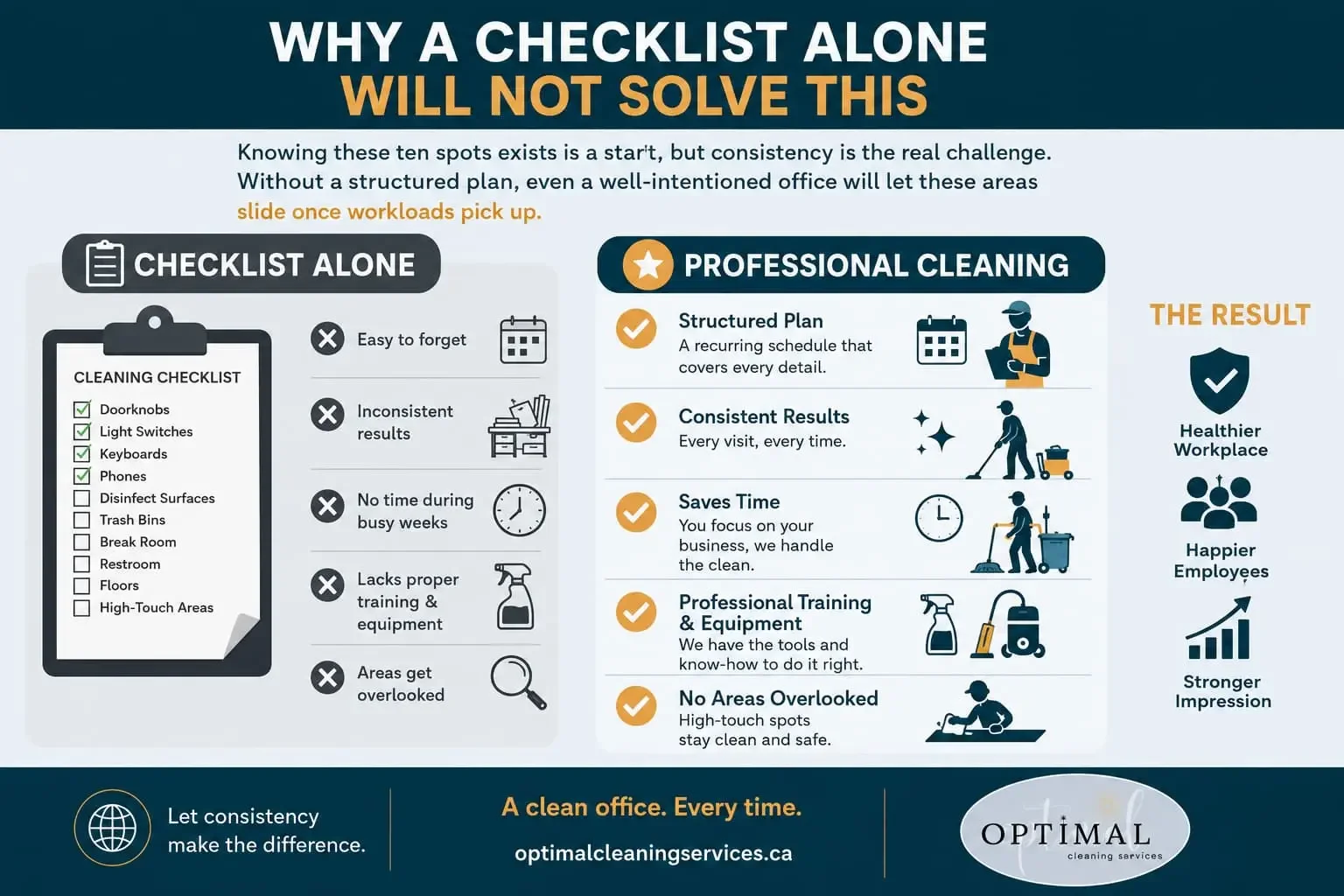
Knowing these ten spots exist is a start, but consistency is the real challenge. Without a structured plan, even a well-intentioned office will let these areas slide once workloads pick up. A checklist taped to a supply closet door rarely survives contact with a busy week.
Professional cleaning teams build these details into a recurring schedule, with the training and equipment to handle them properly every time. That consistency is what separates a workplace that looks clean from one that is.
Let a Professional Team Handle the Details
Optimal Cleaning Services builds every cleaning plan around the details that get missed elsewhere. Contact us today for a free quote and find out what a thorough, professional clean can do for your workplace.