

Many business owners treat cleaning as an expense to minimize. The smarter view is different. Professional commercial cleaning is not a cost. It is an investment that pays for itself through fewer sick days, longer-lasting floors and carpets, and a workplace that leaves the right impression on every client who walks through the door.
Here is how a consistent, professional cleaning plan protects your bottom line. Why Overlooked Areas Matter More Than They Seem
The Real Cost of Skipping Professional Cleaning
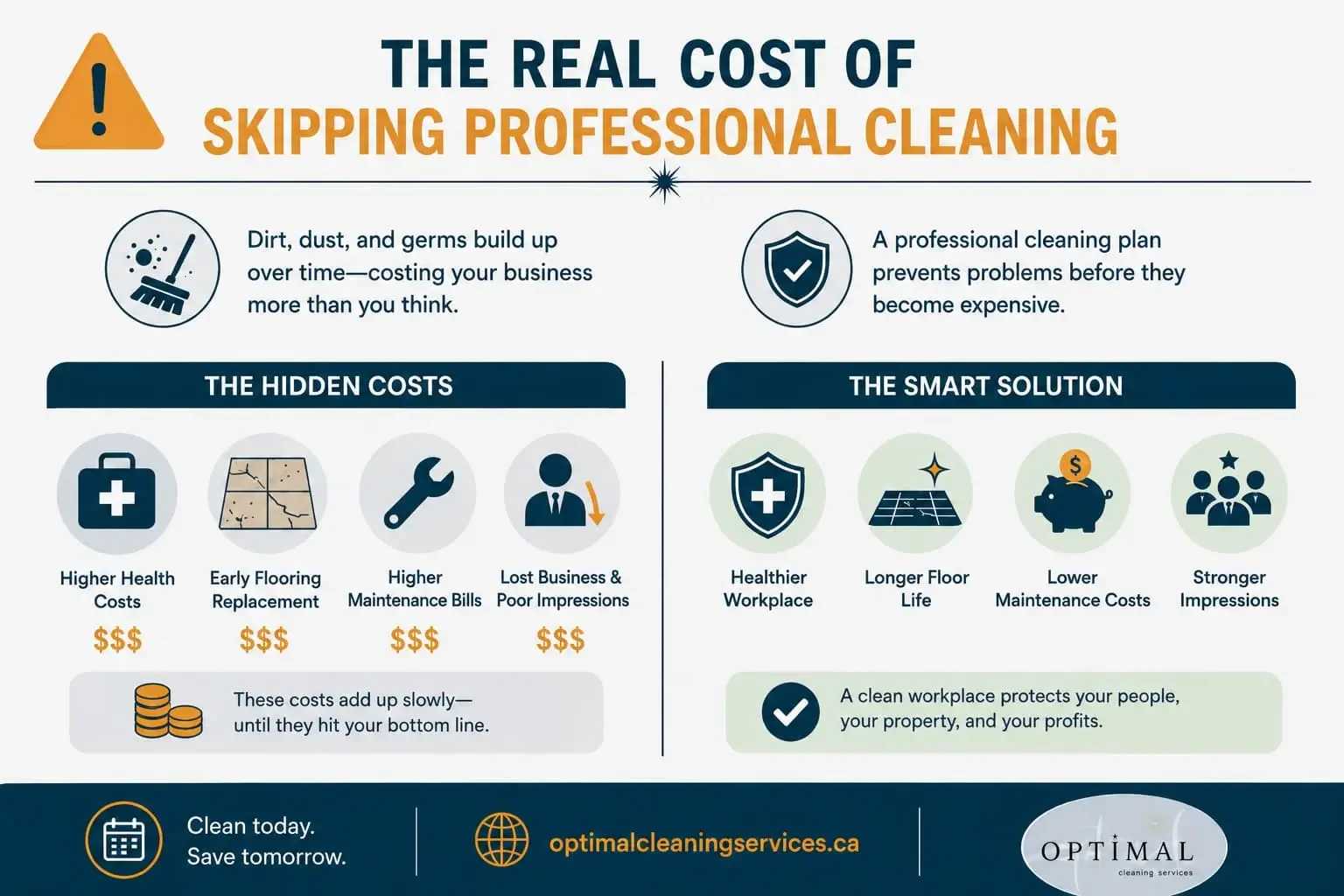
A workplace that looks clean is not always a clean workplace. Surface dust, untreated carpets, and inconsistent disinfection build up over time, often without anyone noticing until the costs show up elsewhere: in health benefits claims, in flooring replacement bills, or in a client who quietly decides not to come back.
These costs are easy to overlook because they do not arrive as a single invoice. They show up gradually, spread across payroll, maintenance budgets, and lost business. A professional cleaning plan addresses the cause before it becomes an expense.
Fewer Sick Days, Stronger Teams
Workplaces are full of shared surfaces: desks, door handles, keyboards, breakroom counters. Without regular, professional-grade disinfection, these surfaces become a steady source of illness transmission among staff.
Professional cleaning teams are trained to target high-touch areas with the right products and frequency, something an informal or part-time cleaning routine rarely achieves with consistency. The result for employers is fewer sick days, less disruption to projects, and a team that stays healthier through cold and flu season.
Reduced absenteeism also means fewer scheduling gaps, less overtime to cover absences, and steadier productivity across the year. The savings are real even when they do not appear on a single line item.
Protecting Your Investment in Carpets and Flooring
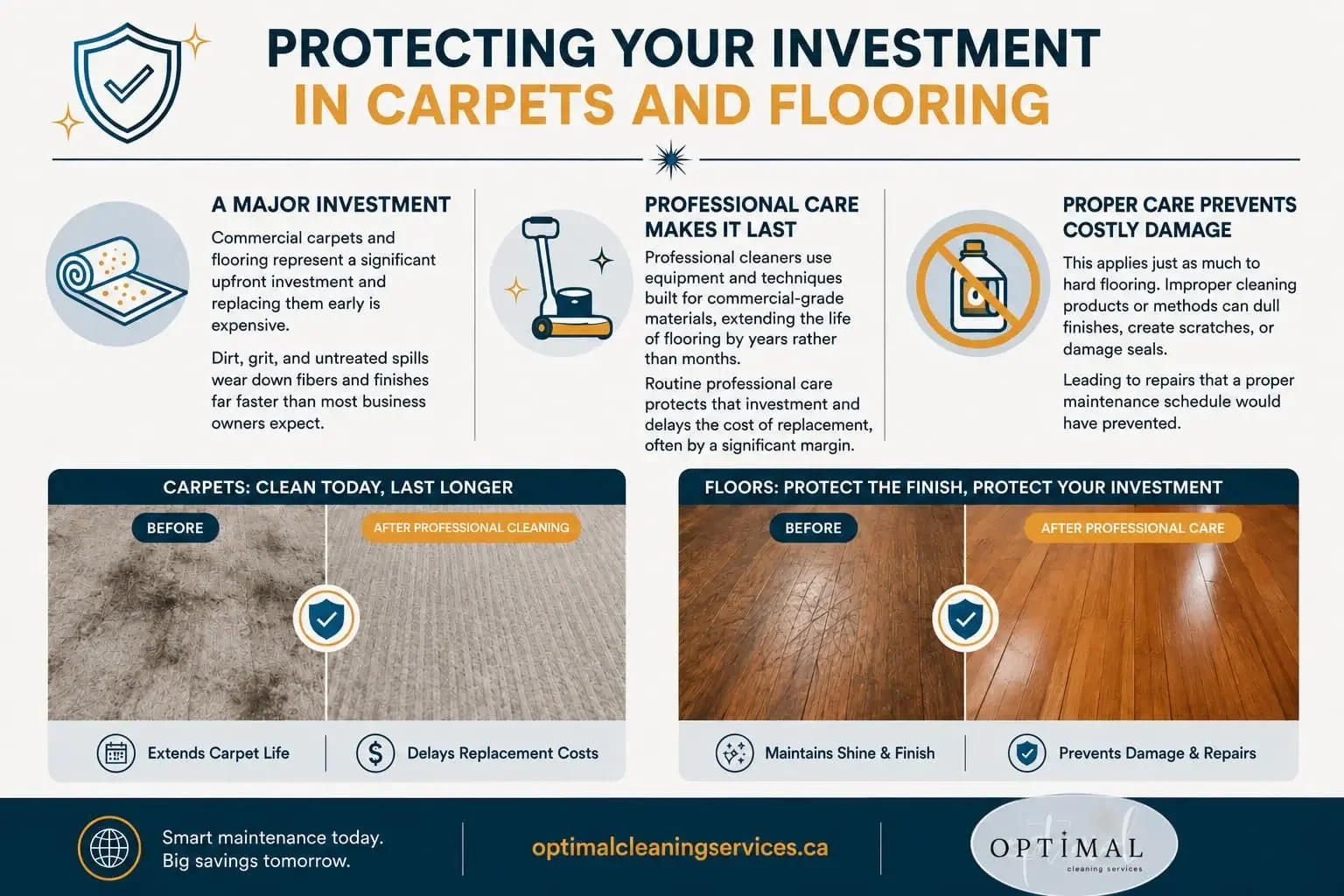
Commercial carpets and flooring represent a significant upfront investment and replacing them early is expensive. Dirt, grit, and untreated spills wear down fibers and finishes far faster than most business owners expect.
Professional cleaners use equipment and techniques built for commercial-grade materials, extending the life of flooring by years rather than months. Routine professional care protects that investment and delays the cost of replacement, often by a significant margin.
This applies just as much to hard flooring. Improper cleaning products or methods can dull finishes, create scratches, or damage seals, leading to repairs that a proper maintenance schedule would have prevented.
First Impressions That Win and Keep Clients
Clients and partners form an opinion about your business within seconds of walking in. A spotless lobby, clean windows, and a fresh-smelling space signal that your company pays attention to detail in everything it does. A neglected space sends the opposite message, regardless of how strong your product or service is.
This matters most in industries where trust is part of the sale: professional services, retail, healthcare, and property management among them. A clean space supports the impression you are already working to build through your team and your brand.
The Bottom Line for Business Owners
Professional commercial cleaning touches three areas that affect a company's finances directly: workforce health, asset longevity, and client perception. Each one carries a cost when ignored and a return when managed properly.
Businesses that treat cleaning as routine maintenance, handled by whoever has time, often pay more in the long run through higher sick days, earlier flooring replacement, and lost client confidence. Businesses that invest in a professional, consistent cleaning plan protect themselves against all three.
Get a Custom Cleaning Plan for Your Business
Optimal Cleaning Services builds cleaning plans around the way your business operates, not a generic checklist. Contact us today for a free quote and find out what a properly maintained workplace can do for your bottom line.